
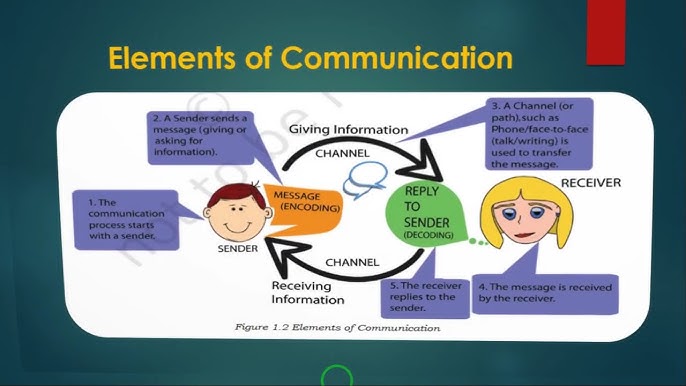
When it comes to 7 elements of communication in media, we can’t skip getting faced by it. This can be an app notification, breaking news on TV, or a viral reel—we are constantly diving into an ocean of information every second. But have you ever wondered how this media ecosystem works? How does a piece of news or an advertisement leave such a deep impact on our minds?
Its key lies in the 7 elements of communication. Who sent it? What was sent? Where it was sent? Whom did it was sent? Why it was sent? When it was sent? And how it affected us? Let’s dive deep into these fundamental elements of communication in media so that we do not remain audience but instead become the best readers or viewers.
Sender / Communicator (Who) – One of the Key Elements of Communication in Media
Communication always begins at a single point, which we call the sender or source. In the context of media, this could be an individual such as a blogger or YouTuber or an organization such as the television channels like Doordarshan, News18, or a major PR agency.
Why is this important?
In today’s times, the trustworthiness of the sender matters most. When you read a news piece, the first thing to consider is who is spreading it. Is it a certified journalist or a social media handle whose sole aim is to create a sensation? The sender may have their own perspective and agenda, as per the message they are giving.
Message/Content) – (What)- Second of the Leading Elements of Communication in Media
A message is the actual information, idea, entertainment, or discussion as one of the 7 elements of communication in media that sender wishes to share. It can take the form of written words, an engaging video, or simply an image accompanied by a headline.
In the media, messages are ‘encoded’ with great care. Take advertisements, for instance; they do not sell a product but craft a message by associating it with emotions such as happiness, security, or success.
- An effective message is always clear, short, and targeted.
- If the message is unclear or overly complex, the audience will lose interest.
Medium/Channel – (Where) the Next of the Elements of Communication in Media Field
The medium is the bridge connecting the sender and the receiver. “Where” is one the most important elements of communication in media that express the major changes over time.
While the landscape was once dominated by print media (newspapers or magazines) and traditional media (puppet tales or folk songs), electronic media (radio or TV) effectively took over. The current era belongs to new media (digital/social media), covered by the internet, electronics, and platforms like Facebook and X (Twitter).
The effects of the medium: Every medium has its own strengths and characteristics. What can be served in a serious newspaper article requires a different art form, one suited to a 15-second slot. That is why it is said, “The medium is the message.”
Receiver/Audience – (To Whom)- Fourth From of the Elements of Communication in Media
The entire framework of the message is for the receiver—that is, the reader, viewer, or listener. In media terminology, this is referred as the ‘audience.’ Today’s media industry views its audience in a highly focused way.
In media, no message spreads without consideration. Data analysis and algorithms determine what should be shown to the youth, what content is suitable for homemakers, and what kind of news appeals to working professionals.
- As recipients, our background, culture, and education determine the meaning we pick from the message.
- People with two different minds can interpret the same political speech differently.
Purpose of Message- (Why)- Most Effective One From All Elements Communication in Media
Here, “why” refers to the key purpose behind the message as one of the most effective elements of communication in media. It clarifies the sender’s underlying intent—such as informing, persuading or inspiring, entertaining, or prompting action.
By defining this purpose, the “why” provides essential context, shapes how the audience perceives the content, and directly determines the overall effectiveness of the media.
Message Time- (When) Another Kind of the Elements of Communication in Media
This framework notifies the exact time of the received message “when the message was delivered.” You can customize the exact hour, date, or frequency to fit the timing. It clarifies the preferred time now, ensuring you always receive critical updates exactly when you need them.
Message Reaction / Audience Feedback – (How they react?)- Last From All of the Elements Communication in Media
In traditional media (such as old-school TV or newspapers), communication was largely ‘one-way.’ You read the news, and that was the end of it. However, new media has made feedback one of the strongest elements of communication for a component of this system.
Nowadays, as soon as a video appears on YouTube, people immediately make their presence felt by commenting, liking, or sharing.
- Feedback importance: This sender knows immediately whether the audience liked the message or not.
Effect: Did anyone change their vote after seeing that message? What is the effect of watching an advertisement when buying a new phone? This ‘impact’ is the true measurement of communication success.
Conclusion
These five elements of communication in the media function like a cycle. If even one of them fails, the entire information communication structure collapses. We refer this effect as a ‘communication gap’ or ‘noise.’
To become a well-informed and smart citizen, whenever you receive information on your screen, make sure to ask yourself these six questions: Who sent? What was sent? Where was it sent? Whom did it was sent? Why was it sent? When was it sent? How was it sent? Once you learn to adopt the message difference, you will always be able to avoid the traps of fake news and manipulative aspects.
Latest edition here https://mo-interiorisme.com/2026/08/11/navigating-konjo-bet-sport-betting-ethiopia-for-football-outcomes/