
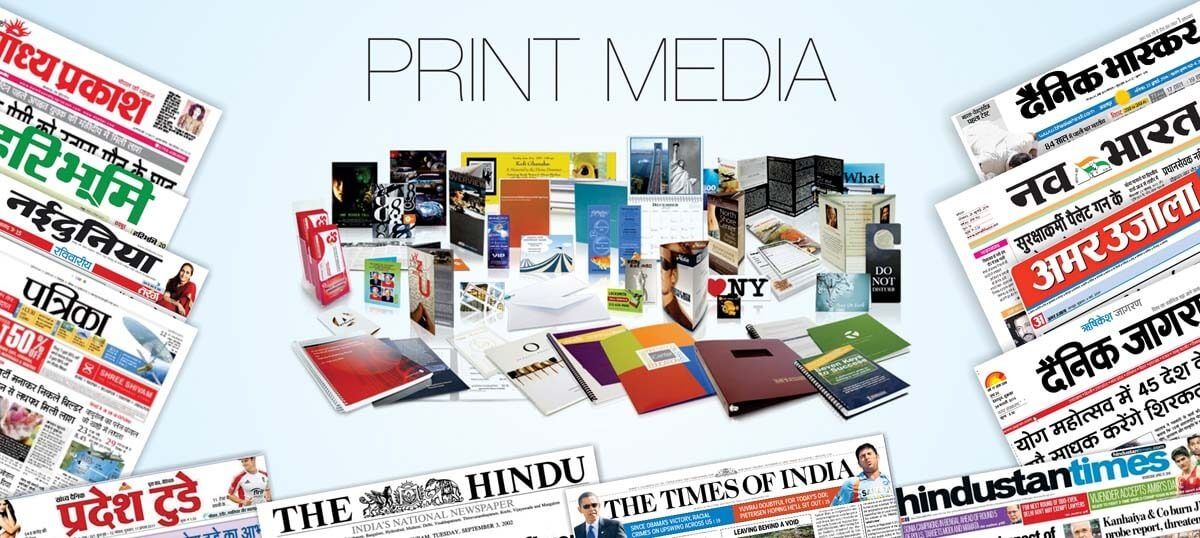
Print media has played a key role in the growth of Indian journalism. Newspapers, magazines, journals, and other printed publications have served longer to inform society, shape public opinion, and strengthen democratic values.
Despite the rapidly growing effects of digital media, social media, and online news platforms, media has not entirely lost its trust and impact. In fact, with changing times, print journalism has expanded its scope by supporting digital technology.
In Indian journalism, print media is not only a medium for publishing news; it also offers numerous career opportunities for journalists, editors, reporters, copywriters, photojournalists, and media management professionals. Let us explore the top five key areas of scope for paper media in Indian journalism.
Role of Print Media in News Reporting and Field Journalism
The most powerful scope within print media is news reporting. Newspapers and magazines require trained journalists and reporters to cover events at local, national, and international levels. A reporter can work in various fields such as political activities, crime, education, health, sports, business, village development, the environment, and social issues.
There are also good employment prospects in local journalism, as regional newspapers constantly require news from small towns and villages. Reporting is not only limited to writing about events. A good journalist must possess the ability to gather information, interact with sources, verify facts, and present the news in an impartial and clear manner.
In this field, one can find opportunities to work in roles such as beat reporter, director, special director, and investigative journalist.
Role of Print Media in the Editing and Copy Desk Department
Another important opportunity in print media is editing. News reports and articles undergo editing before being published in newspapers or magazines. This process involves refining the language, facts, structure, headlines, and the overall presentation of the news. Copy and sub-editors correct errors in news stories and make them ready for publication. They also create engaging and effective headlines, subheads, and introductions for the news.
This field is promising for young people who possess strong writing skills and proficiency in both Hindi and English. Moreover, many media organizations today also operate their own websites and digital platforms. Consequently, opportunities have expanded beyond print into digital newsrooms for those with editing experience.
Role of Print Media in Feature Writing and Specialized Journalism
Feature writing in print media is a creative and expansive field. Beyond hard news, newspapers and magazines publish articles that explore a person, event, issue, place, or topic in depth. Feature writers can write on topics such as politics, film, culture, travel, education, science, technology, lifestyle, rural India, and social issues. Sunday special editions, weekly magazines, and special issues serve as particularly important platforms for feature writing.
Additionally, a journalist can build a career in ‘beat’ or specialized journalism by developing expertise in a specific field. For instance, a journalist can choose sports, business, film, or environmental journalism as their area of specialization.
Role of Print Media in Photo Journalism and Visual Storytelling
In print media, photographs hold a specific place alongside news reports. Consequently, photo journalism remains a career path with several scopes. A powerful photograph can make the entire story behind a news item to readers using very few words. Photo journalists cover political events, natural disasters, sports competitions, social events, cultural programs, and significant public activities on camera.
The nature of photo journalism is changing today. Mobile cameras, digital cameras, photo editing software, and online publishing have opened up new paths for visual storytelling. Thanks to the digital platforms of print organizations, photo journalists also have the opportunity to create online photo stories, galleries, and multimedia content.
Role of Print Media in Digital and Multiplatform Journalism
The fastest-growing area within Indian print media is digital and multi-platform journalism. Today, most major newspapers maintain a presence on websites, mobile apps, and social media platforms alongside their print editions.
This shift has completely increased the scope of work for the traditional print journalist. Now, instead of merely writing news for newspapers, a journalist may be required to produce digital copy for websites, social media posts, photos, videos, and other online content.
New opportunities such as digital content writer, web copy editor, social media editor, multimedia journalist, and digital news producer roles are open in this field. Therefore, learning skills like SEO, social media, digital storytelling, and basic multimedia can strengthen the careers of print journalism students.
Conclusion
The nature of print media in Indian journalism is increasing over time, yet its impact remains strong. Its key areas of scope include news reporting, editing, feature writing, photojournalism, and digital multi-platform journalism.
Today, good language skills and writing ability alone are not enough to succeed in paper media. Journalists must also develop an understanding of research, fact-checking, digital technology, social media, and multimedia tools. For students looking to build a career in journalism, paper media still offers a solid foundation—and when combined with digital technology, the opportunities within the field could expand even further in the future.